Understanding Jake Paul's Music Journey - Music Industry Insights & Tips You Can Use To Turn Your Music Into A Wellness Tool
- Jake Paul
- Jun 17
- 5 min read

When I first started exploring music, it wasn’t about fame or charts. It was about finding a way to express the chaos inside me - the anxiety, the trauma, and the long years of struggling with addiction. I felt like no one knew what I'd gone through, what I'd witnessed, or what I needed to tell people. Music became a lifeline - a tool to communicate, reset my nervous system, and reconnect with myself. Today, I want to share my journey through the music industry, the lessons I’ve learned, and how it all ties into healing and growth.
The Early Days: Finding My Voice Amidst Chaos
I wasn’t always confident in my musical abilities. For years, I was trapped in a cycle of anxiety and PTSD, numbing the pain with alcohol. Music was something I admired from afar but never thought I could truly embrace. It wasn’t until I started using guitar and breathwork as tools to regulate my nervous system that I realized music could be more than just sound - it could be a path to recovery.
I remember sitting in my small apartment on the East Side of Milwaukee, guitar in hand, feeling the tension in my chest slowly ease as I strummed simple chords. It was raw, imperfect, and deeply personal. That vulnerability became the foundation of my music journey. I wasn’t chasing perfection; I was chasing freedom.

Music Industry Insights: What I’ve Learned Along the Way
The music industry can feel overwhelming, especially when you’re coming from a place of personal struggle. It’s easy to get lost in the noise, the competition, and the pressure to perform. But here’s what I’ve learned:
Authenticity resonates: People connect with real stories, not polished personas. Sharing my struggles openly helped me build a genuine connection with my audience.
One time in Green Bay, after a show, a woman approached to tell me about her husband...how he'd passed unexpectedly. She said my song Hollow reminded her of him, helped her process her loss, and gave her some relief.
Consistency beats perfection: Showing up regularly, even when I didn’t feel ready, was key to growth. Book the gig - don't wait until you're "ready."
Music is a tool, not just entertainment: For me, music became a way to regulate my nervous system, manage anxiety, and create space for healing.
Collaboration opens doors: Working with other artists and creators expanded my perspective and pushed me to grow.
Balance is essential: Navigating the business side without losing sight of my personal mission kept me grounded. At the end of the day, money becomes a distraction. Keep the music up front and center of your motives. Put money first, and you'll slowly lose the joy of playing.
These insights aren’t just about making music; they’re about using music as a practical tool for transformation. That’s why I’m passionate about sharing this journey with others who might be struggling with similar challenges.
What is Jake Paul's Highest Charting Song?
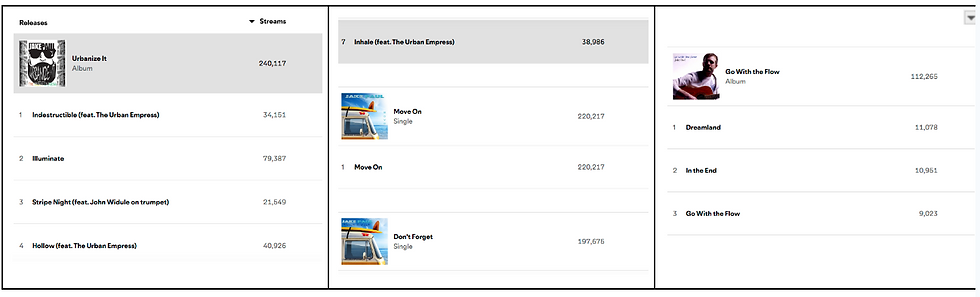
While my focus has always been on the healing power of music rather than chart success, it’s natural to wonder about milestones. My music career has seen some notable moments; radio play & interviews, big stages (Summerfest - Harley Stage, Potawatomi Casino, The Bitter End, NY), with tracks that have gained significant attention and streams. My highest charting song, if I had to guess, is Move On.
It's tough to track all the data - I have several dashboards to compare (Spotify, Pandora, YouTube, ASCAP, Music Reports, CDBaby - just to name a few). The point here is that I put my music 'out there' to get it out of my head and into the world...in an attempt to find peace...from a place of emotional survival.
For me, the numbers and stats are fun and exciting to look at, but I also remind myself that success can look different for everyone, and the most important thing is staying true to your purpose.
How Music Helped Me Overcome Trauma and Addiction
Music wasn’t just a hobby; it became a lifeline. After 20+ years of managing anxiety and PTSD with alcohol, I found that traditional methods weren’t enough. The nervous system regulation techniques I developed, including guitar playing and breathwork, gave me practical tools to manage stress in real-time.
Here’s how music helped me:
Grounding through rhythm: Playing guitar helped me focus on the present moment, breaking the cycle of anxious thoughts.
Emotional expression: Writing songs allowed me to process feelings I couldn’t put into words.
Building confidence: Each small musical victory boosted my self-esteem and motivation.
Creating community: Sharing my music connected me with others on similar paths, reducing isolation.
Replacing unhealthy habits: Music became a healthier way to “take the edge off” instead of reaching for alcohol.
If you’re struggling with similar issues, I encourage you to explore music as a tool for nervous system regulation. It doesn’t require talent or years of training - just a willingness to try and be present with yourself.
Practical Tips for Using Music as a Healing Tool
If you’re ready to start your own music journey, here are some simple steps to get going:
Start small: Pick up a guitar or any instrument you feel drawn to. Don’t worry about skill; focus on the experience.
Use breathwork: Combine playing with deep, slow breaths to calm your nervous system.
Create a routine: Even 5 minutes a day can make a difference.
Write your feelings: Try writing lyrics or journaling about your emotions alongside your music.
Share your progress: Whether with friends, family, or an online community, connection matters.
Be patient: Healing through music is a journey, not a quick fix.
Remember, the goal isn’t to become a professional musician overnight. It’s about using music as a practical, accessible tool to help you respond to life instead of reacting to it.
Moving Forward: Embracing Music and Life with Purpose
My music journey has been intertwined with my path to recovery and nervous system regulation. It’s taught me that healing is possible, even when it feels out of reach. By sharing my story and the tools that helped me, I hope to inspire others to find their own way back to peace and presence.
If you’re ready to take control of your reactions, improve your sleep, and be more present with your family, music might just be the key you’ve been looking for. It’s not about perfection or fame - it’s about connection, expression, and healing.
For those interested in exploring this further, I invite you to check out The Guitar Reset Method and see how music can be a part of your transformation.
This journey is ongoing, and every day brings new challenges and victories. But with music as a companion, I’m confident that healing and growth are within reach for anyone willing to take the first step.

Thanks for stopping by,
Jake


Comments